property
Perth CBD Vendors Cutting Prices Faster as Days on Market Climb to 14-Month High
The window between listing and sale is stretching, and sellers who mispriced in spring are now paying for it at settlement.
How we reported this
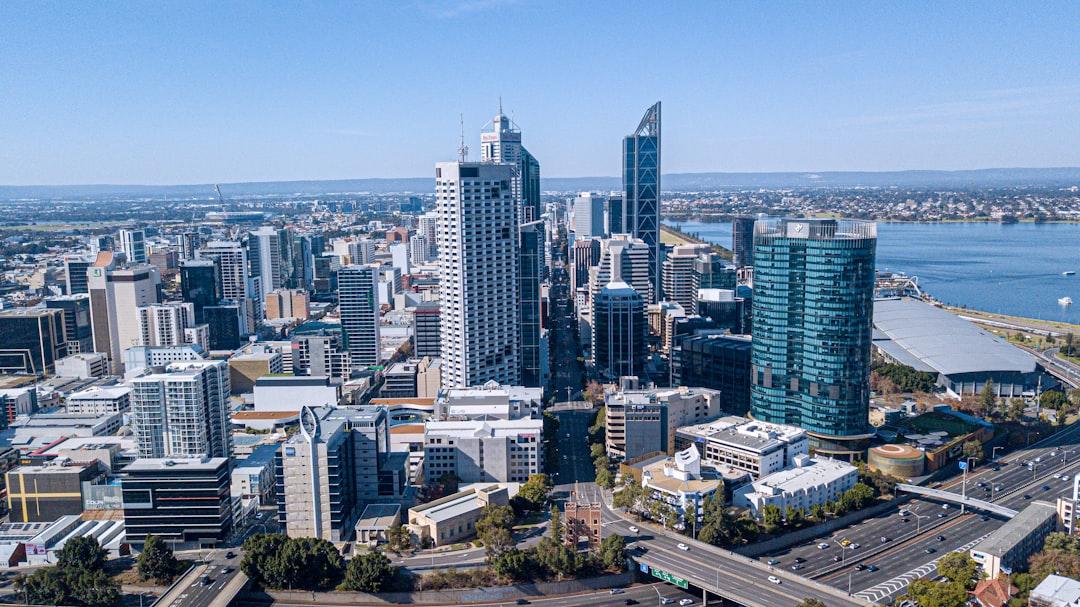
Properties listed across the Perth CBD core are sitting unsold for longer than at any point since May 2025, with the median days on market for apartments and commercial-residential stock pushing past 42 days in the June quarter, a figure that is forcing a rethink among vendors who listed at peak-cycle prices earlier this year.
That shift matters because the CBD micro-market has spent the past two years behaving like a seller's fortress. Stock was thin, inquiry was deep, and discounting was almost embarrassing to discuss. That dynamic has quietly reversed. Agents working the St Georges Terrace and Murray Street corridors are reporting that conditional offers are being accepted at figures sellers would have rejected outright in late 2024, and the Offer-to-Acceptance gap, the percentage difference between initial asking price and the executed contract, has widened noticeably through the second quarter of 2026.
What the Numbers Actually Show
Based on settlement data tracked through REIWA's quarterly reporting cycle, vendor discounting on CBD apartment stock reached an average of 4.2 percent in the three months to June 30, 2026. That compares to a discount rate of approximately 1.8 percent recorded during the same period in 2025. In dollar terms, on a unit listed at $750,000 on the eastern end of Hay Street near the Forrest Chase precinct, that gap represents roughly $31,500 surrendered at the negotiating table, money that, twelve months ago, vendors were rarely leaving behind.
Days on market for strata-titled residential product in the CBD proper, broadly defined as the area bounded by the Mitchell Freeway to the west, the Swan River foreshore to the south, and the railway corridor through Perth Station to the north, averaged 42 days in Q2 2026, up from 28 days in Q2 2025 and 31 days in Q1 this year. The trend line is consistent, not a single-month blip.
Office-conversion apartments, which proliferated across older Heritage precinct buildings along William Street between 2021 and 2024, are sitting the longest. Several listings in that segment have clocked over 60 days on market without a binding contract, according to publicly visible listing timestamps on realestate.com.au.
Where Vendors Are Feeling the Pressure Most
The East Perth boundary, particularly the Claisebrook Cove precinct and stock feeding off Royal Street, shows a slightly different pattern. Freestanding townhouses and terrace-style product there are moving closer to 35 days, and vendor discounting is narrower at around 2.9 percent. That relative resilience reflects both lower listing volumes and a buyer profile that is more anchored to owner-occupation than the high-rise strata market to the west.
Northbridge presents its own subplot. Mixed-use lots and ground-floor retail-residential combinations along Lake Street and James Street have proven particularly slow. Several vendor-managed listings that bypassed traditional agency representation sat beyond 70 days before either being relisted or withdrawn, an outcome that has prompted at least one local agency to run investor briefings at its Raine Square office through July, specifically addressing reset-pricing strategies for the second half of 2026.
For prospective buyers, the current environment is the most structurally favourable entry point since early 2024. Days on market above 40 typically signals that a vendor has already mentally adjusted their expectations, even if the listed price has not moved. Buyers presenting clean finance pre-approvals and tight settlement timelines, 30 days rather than the drawn-out 60-day terms that became common during the competitive years, hold real leverage. The product sitting at 45-plus days on market in the Hay Street mall catchment and the upper floors of the Piccadilly precinct on Hay Street is there precisely because someone overpriced it in April. That mispricing is now the buyer's opportunity.
Vendors who listed in March or April and have not yet transacted face a straightforward calculation heading into the July-August school-holiday lull: adjust to market now, or carry the holding costs through a period when inquiry traditionally thins further. The agencies fielding the most active buyer pools in the CBD right now are counselling a price correction rather than a withdrawal. The second half of 2026 will show whether sellers take that advice.
This article is general information only and is not personal financial or investment advice. Consider your own circumstances and seek licensed professional advice before making financial decisions.